From Training to Transformation: Sparking Reflection, Ownership, and Momentum Across Store Operations
The Context
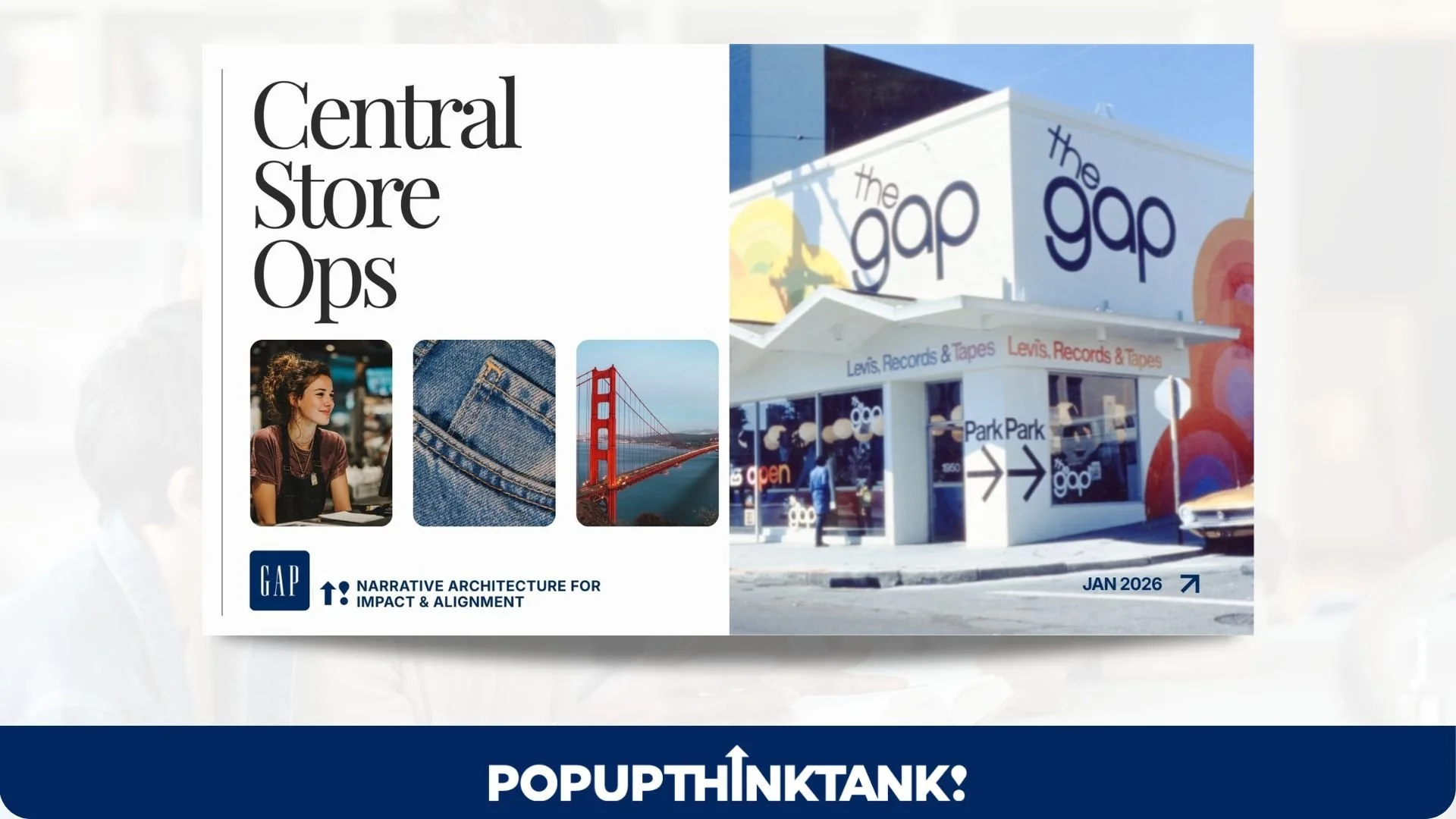
A cross-functional group of leaders inside GAP Inc.’s Central Store Operations—spanning Store Ops, HR, Communications, Labor Strategy, and more—came together at a moment that felt familiar:
Plenty of initiatives.
Plenty of meetings.
But a growing sense that something deeper wasn’t clicking.
Not a lack of effort. Not a lack of talent.
Something harder to name.
The Real Challenge (Not the Polite One)
This wasn’t about skills.
It was about how people were experiencing their roles inside the system.
Leaders felt responsible—but not always heard
Decisions moved—but ownership felt blurry
Collaboration existed—but often without a shared language
In other words:
Smart people were working hard inside unclear stories.
And traditional L&D approaches—content delivery, frameworks, or surveys—wouldn’t reach that level.
The Decision
Instead of another training… or another survey…
GAP chose something different:
A 90-minute PopUpThinkTank session designed to:
Slow the moment just enough to see what’s really happening
Create a shared language for complexity
Generate reflection and forward momentum
Not to solve everything.
But to shift how people think, see, and engage with the work itself.
The Experience (What Actually Happened)
The session blended three simple but powerful elements:
Narrative Architecture — using story roles (Hero, Guide, Villain, Victim) to reveal how work actually moves
RACI Thinking — grounding those roles in real ownership and decision-making
Structured Reflection + Fast Ideation — individual insight followed by small-group momentum
The design principle was clear:
Momentum over resolution.
Not answers—but movement.
Participants reflected individually, then built on each other’s thinking in small groups—surfacing insights that typically stay buried in day-to-day execution.
As described in the session design:
“Participation without pressure”
“Max value in minimal time”
“Design for movement, not final answers”
The Turning Point
The shift didn’t come from a slide deck.
It came from seeing one another and moving the work forward.
When people began to see:
The roles they were playing
The roles others were casting them into
And how quickly clarity (or lack of it) shaped behavior
One insight captured it:
“Momentum comes from naming the role you’re playing—and the one you’re being cast in.”
In that moment, the work changed from external (“fix the process”) to internal + relational:
“Who do I need to become to move this forward?”
That’s when L&D becomes development.
The Outcomes
Immediate Impact
Cross-functional leaders developed a shared language for collaboration and influence
Participants surfaced real tensions and patterns, not just opinions
The room generated momentum without forcing premature decisions
Deeper Impact
People reflected after the session—over the weekend
Personal commitments and mindset shifts emerged organically
Leaders began seeing their roles—and each other—differently
As Jimmy Knowlton, Sr. Director, put it:
“The buzz this week has continued to be how great—and genuinely different—this training felt.”
“The consistent takeaway is that the session made people think differently.”
“Many shared that they reflected over the weekend and even made some personal observations and commitments.”
“All of that tells me this really sparked something with the team.”
Why This Worked (Through an L&D Lens)
Most training delivers content.
This created conditions for transformation.
What made the difference:
1. Reflection Before Action
Participants processed their own experience before reacting to others.
2. Shared Language for Complexity
Story roles + RACI gave teams a way to name what’s usually invisible.
3. Psychological Safety Without Passivity
People contributed meaningfully—without pressure to perform.
4. Momentum, Not Overload
No massive action plans. Just clearer thinking and next moves.
As the session framing describes:
“The goal was momentum over polish… to reveal patterns that usually remain implicit, and open new ways of moving forward together.”
What Happened Next (The Real Question)
The session didn’t end the work.
It started a different kind of conversation:
How do we keep this alive?
Jimmy’s instinct captures the moment perfectly:
Light-touch activations
Ongoing conversations
Integrating into existing meetings
Letting insight breathe without forcing it
That’s the shift:
From event → to practice.
Why This Matters for Sr. Directors
If you’re responsible for developing your team inside a complex organization, this case points to something important:
People don’t need more frameworks.
They need:
A way to see what’s really happening
Language to navigate roles and tension
Space to reflect, not just react
Moments that stick beyond the session
Because the real goal isn’t training.
It’s this:
People thinking differently come Monday.
Design your session —> Use the Session Builder.